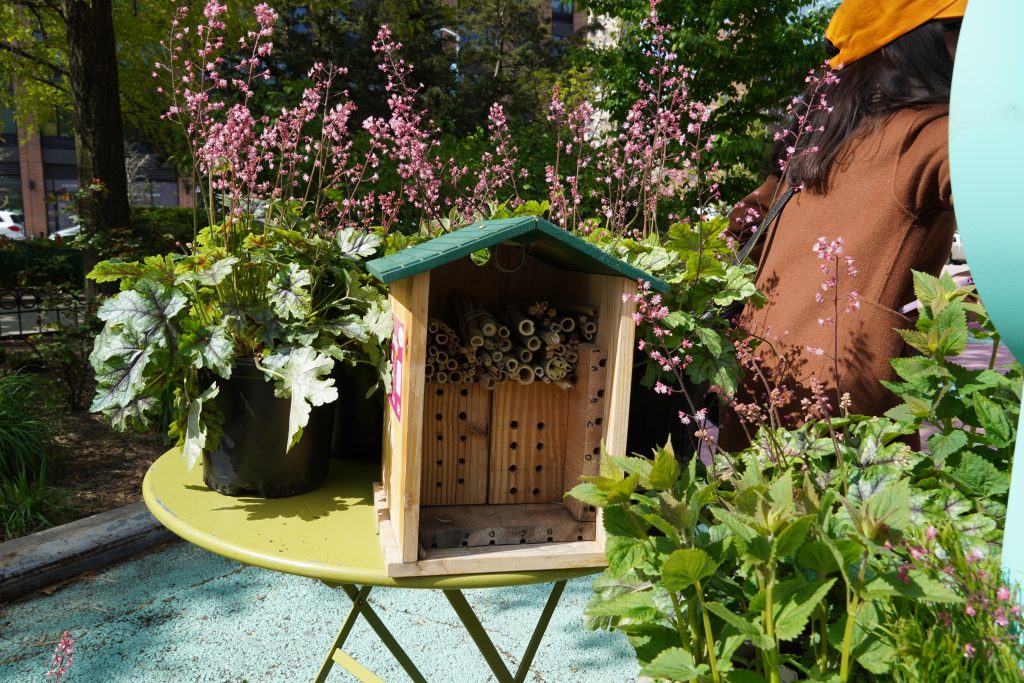
When most people imagine a pollinator, they picture the familiar honeybee. Yet honeybees, which were brought to the Americas from Europe, tell only part of the story. Hundreds of native bee species quietly sustain the plants and ecosystems that give our city life, favoring native flowers that once filled fields and meadows. As concrete has replaced much of that landscape, these native pollinators have lost their nesting places and food sources.
The Hort recognized an opportunity: if we can create space for plants to thrive in dense urban environments, we can also support the bees that sustain them by integrating our streetscape work with habitat restoration efforts.
A Citywide Effort to Bring Back Native Bees
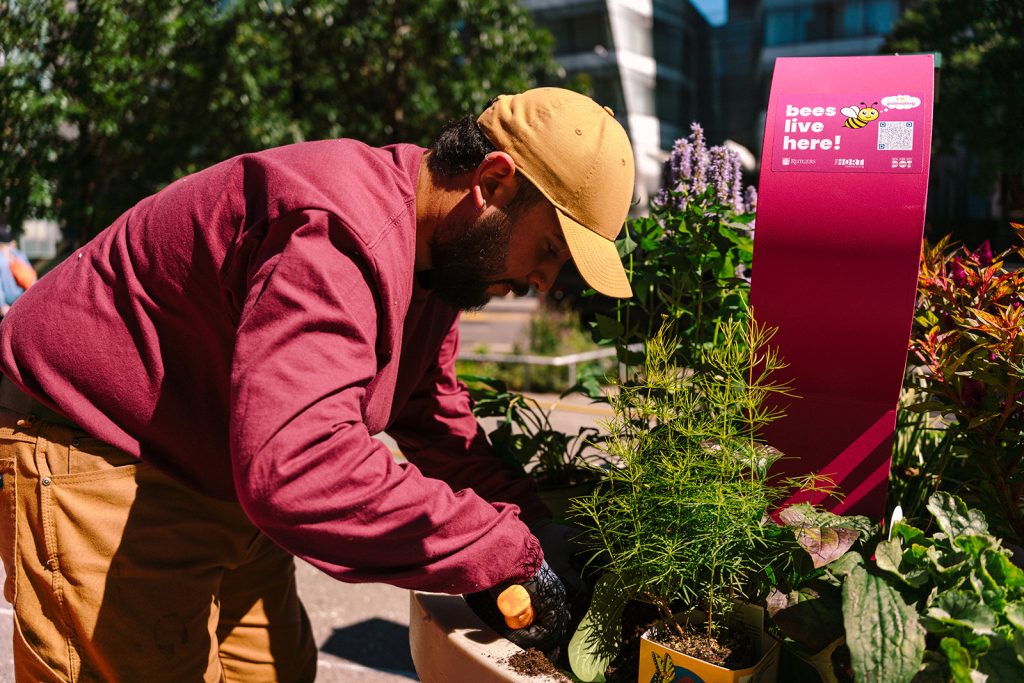
The Pollinator Port Project (PPP) began as a practical experiment in ecological design—one that merges research, expertise and community care. Led by The Hort, in partnership with Rutgers University and the New York City Department of Transportation (DOT), and supported by the Ittleson Foundation and The Burpee Foundation, the project asks a simple question: how can we make space for pollinators in the places where New Yorkers live, walk, and gather?
Working with DOT, The Hort identified public plazas and Open Streets already rich in greenery and community activity. Each site was evaluated for light, vegetation, and soil conditions, and nearby neighbors were engaged early to ensure the new habitats would take root both ecologically and socially.
With guidance from Dr. Kimberly Russell, a leading bee researcher at Rutgers, the team developed two complementary models—the Bee Hotel for cavity-nesting bees and the Bee Bunker for ground-nesting species. Built from simple, replicable materials, these structures give native bees something the city often lacks: safe, sheltered places to live.
What We’re Learning From the Pollinator Ports
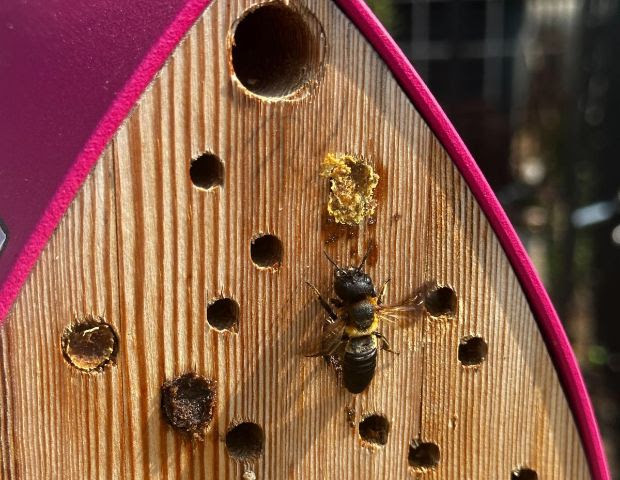
Since launching in 2021, PPP has expanded to twelve active sites across New York City. Each site is monitored for bee activity and species diversity, contributing to a growing body of knowledge about how pollinators adapt to urban life.
Over four years, The Hort and its partners have refined their designs and tested materials, even comparing them with model habitats by Vestre, a sustainable manufacturer of urban furniture. Each iteration brings new insight into what helps native pollinators thrive—how planting choices, soil types, and structural design all work together to create viable habitat.
Building on what we’ve learned, The Hort plans to continue expanding the network of Bee Hotels and Bee Bunkers citywide over the coming years. This growth will bring native bee habitats to even more plazas, schoolyards, and community spaces, extending the reach of the project across all five boroughs.
Growing Community Connections
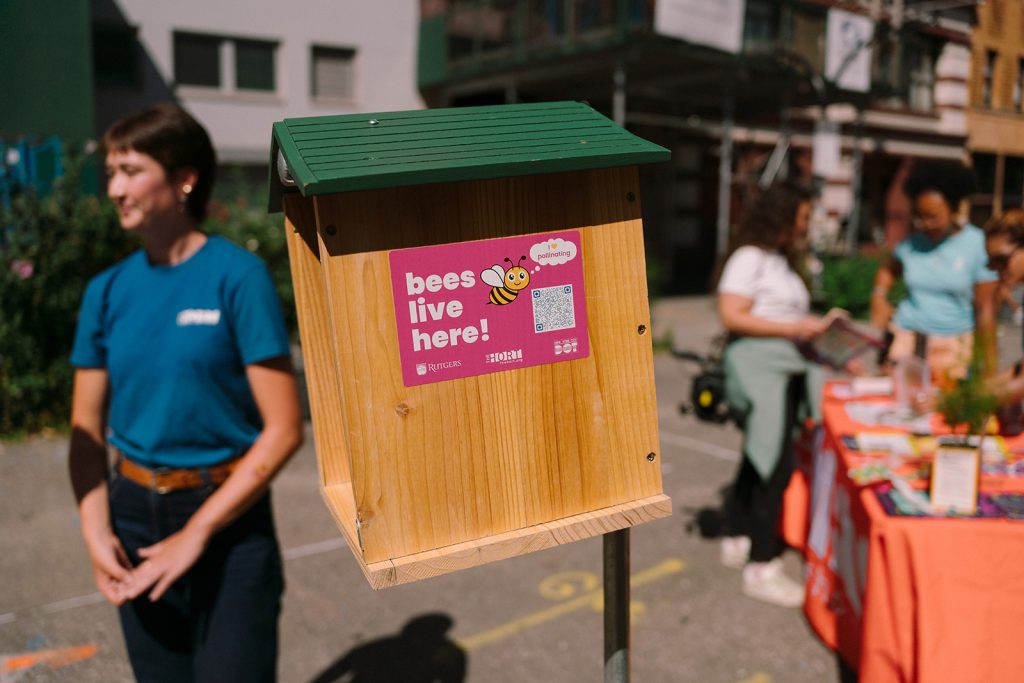
Science tells only half the story; community completes it. Since the start of PPP, The Hort has hosted three Bee Jubilee events at the Greenhouse and Education Center at Denny Farrell Riverbank State Park, inviting residents and visitors to experience the world of native bees firsthand. Families have planted, crafted, and played identification games that link bee behavior to the food on their tables and the flowers in their neighborhoods.
At plazas and Open Streets, we have hosted public programs featuring native bee identification games and observation stations that spark curiosity in community residents, creating casual opportunities for discovery and learning.
Additionally, we had the pleasure of presenting at this year’s American Society of Landscape Architects (ASLA) Annual Conference, where we shared the accomplishments of the PPP and our findings with peers across the urban horticulture industry.
Looking Ahead
As the Pollinator Port Project moves into its next phase, we continue to monitor and maintain all existing habitats, documenting seasonal changes and bee behaviors. The data will inform future designs and help identify new sites for expansion. Each potential location is carefully evaluated for food sources, nesting conditions, and nearby vegetation—because, as our team knows well, thriving pollinator habitats depend as much on thoughtful planting as on structure.
But PPP’s impact extends beyond the sites themselves. Through ongoing education and outreach, The Hort is connecting with schools, community groups, and local stewards, helping others understand how to design and maintain their own pollinator-friendly spaces. The ultimate goal? To spark a movement of citizen-led pollinator care—one Bee Hotel, one Bee Bunker, one planting at a time.
The PPP Toolkit
ganizers. It includes:
- Step-by-step guides for constructing a Bee Hotel and Bee Bunker
- A Plant Palette highlighting native species that feed urban pollinators
- Interactive materials such as a Native Bee ID Bingo sheet and observation logs
- Adaptable lesson plans for educators that connect ecology with science, art, and stewardship
- A curated collection of trusted resources for continued learning
With these tools, any classroom or community garden can become a small haven for pollinators, strengthening the city’s ecological web one pocket habitat at a time.
The Plant Palette is available now—click below to download yours and stay tuned for the full Toolkit release.