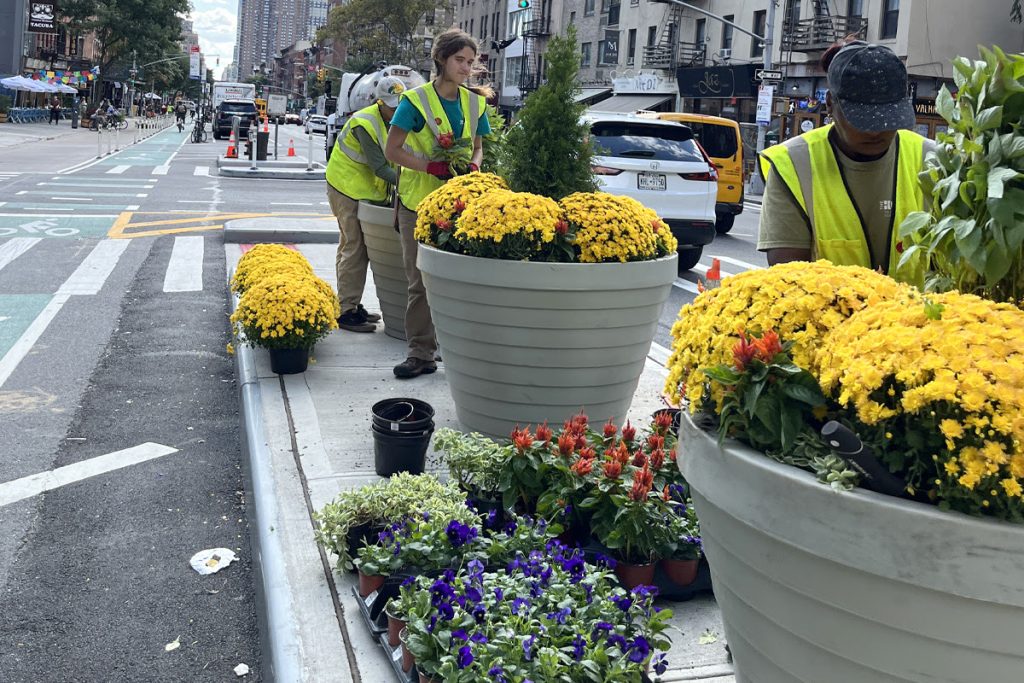
Introducing Jeremy Jungels, our Senior Director of Horticulture at The Hort. He has been with The Hort for 5 years, but prior to that, he interned at several botanic gardens, ran his own landscaping business in central NY, and did plant and wildlife research in New York and New Mexico. Besides geeking out on plants, he likes to stay active with hiking, dance, and sports.
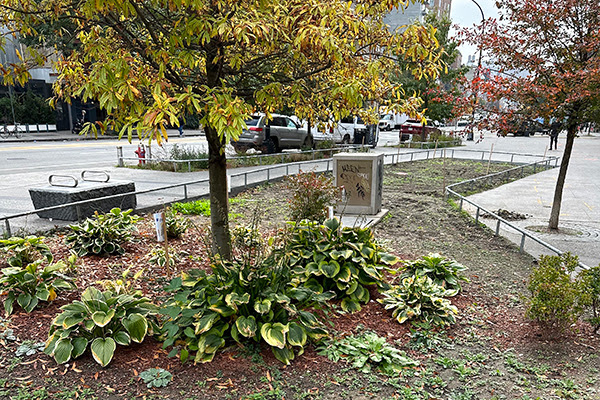
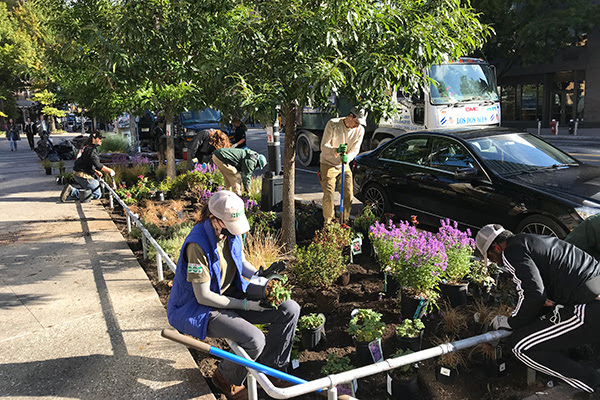
In bustling urban landscapes, the narrow strips of land between sidewalks and streets are frequently overlooked or neglected. Deemed ‘Hellstrips’, a term coined years ago by well-known landscape designer, Lauren Spring Ogden, these areas are overlooked to say the least.
I’ve heard these spaces described as trampled-on, stepped-over, parched, unsightly, dog-potty ridden, and worse. They’re often characterized by compacted soil, road salt contamination, extreme temperatures, and limited space. And these are the realm of our street trees! Despite these challenges, at The Hort we believe that no place is unplantable. While often neglected, and a challenging place for any plant to grow, Hellstrips are one of the biggest opportunities for urban greening that exists in our densely populated and developed city of New York.
At the Hort our motto is “greening the in-between”, meaning we install and maintain plant life to public spaces between New York’s apartment buildings, roads, skyscrapers, and other infrastructure. Hellstrips are a big part of the “in-between”. Where some see Hellstrips, we see possibilities. We believe with the proper prep and care, Hellstrips can be miniature ecosystems that contribute to urban biodiversity and provide food for pollinators such as butterflies and bees. Pollinators need food such as flower nectar and pollen throughout the season, and understory plants can fill in the gaps between when street trees are flowering. Just like trees, these understory plants can improve air quality and help to combat climate change by storing carbon. Through careful plant selection and soil remediation, hellstrips can be brought to life, making the city a thriving place for people and pollinators both.
“Greening the in-between” starts with the work we do in public spaces, but it doesn’t have to end there. Programs like the Brooklyn Botanic Garden’s greenest block in Brooklyn, help encourage people to garden the hellstrips in front of their apartments and homes. Ultimately, we hope to make Hellstrip gardening and “greening the in-between” a city-wide movement in which we see opportunity for ecological improvement and beautification in every city corner and crevice. By embracing the challenge of Hellstrip gardening, we can create a tapestry of green spaces that enhance the urban experience and improves the health and quality of life for all New Yorkers.
Interested in having the Hort greenify your Hellstrip? Click below to learn more about our wide array of horticultural services and to learn more.