Earlier this year, the Greenhouse and Education Center at Denny Farrell Riverbank State Park looked like a quiet, dormant shell of its vibrant summer self. What had once been lush and flourishing had died back, pruned and tucked in for the winter. But beneath this stillness and throughout the RENEW winter season, something powerful was already taking root.
From February through April, our staff, interns, and community members began the work of seeding hundreds of plants in preparation for the growing season. As winter faded, the greenhouse slowly filled with life again. With sprouts emerging and leaves unfurling, each one has been nurtured with care by the many hands that visit the space every day.
Among these seedlings are familiar names like basil and collard greens, alongside lesser known (but no less important) plants such as:
- Tomatillo – A key ingredient in green salsas like salsa verde; Integral to Mexican cuisine and grown widely throughout Latin America
- Hibiscus – Dried petals are steeped for agua de jamaica in Mexico, zobo in West Africa, and sorrel in the Caribbean; Celebrated across African diasporic cultures and known for both its tart flavor and medicinal benefits
- Shiso – Deeply rooted in Japanese and Korean home gardens and kitchens; Used fresh in sushi, salads, pickles, or wrapped around rice balls
- Callaloo – A beloved leafy green in Jamaica, Trinidad, and other Caribbean nations; Cooked down into hearty stews with garlic, onions, and coconut milk, often paired with fish or rice
- Huacatay – Central to Andean cooking and indigenous foodways; Used in ají de huacatay, a Peruvian green sauce served with potatoes or grilled meats; offers a minty, basil-like flavor
- Tulsi – Sacred in Hindu tradition and grown in home gardens and temples across India; Often steeped into herbal teas, also used in Ayurvedic medicine
- Papalo – A pungent, citrusy herb added fresh to tacos, tortas, and salsas; Popular in Puebla and Oaxaca region of Mexico
- Lemongrass – Used in broths, teas, and curries for its lemony, aromatic quality; Grown in Vietnamese, Thai, Cambodian, and Filipino gardens
- Culantro – A pantry staple across Latin America and the Caribbean; Tastes similar to cilantro but stronger—used in sofrito, chutneys, and soup
This wide variety reflects the cultural diversity of the communities we serve. While some plants may be entirely new to one gardener, they may evoke powerful memories or family traditions for another. Our greenhouse becomes a place where cultures meet through flavor, scent, and soil.
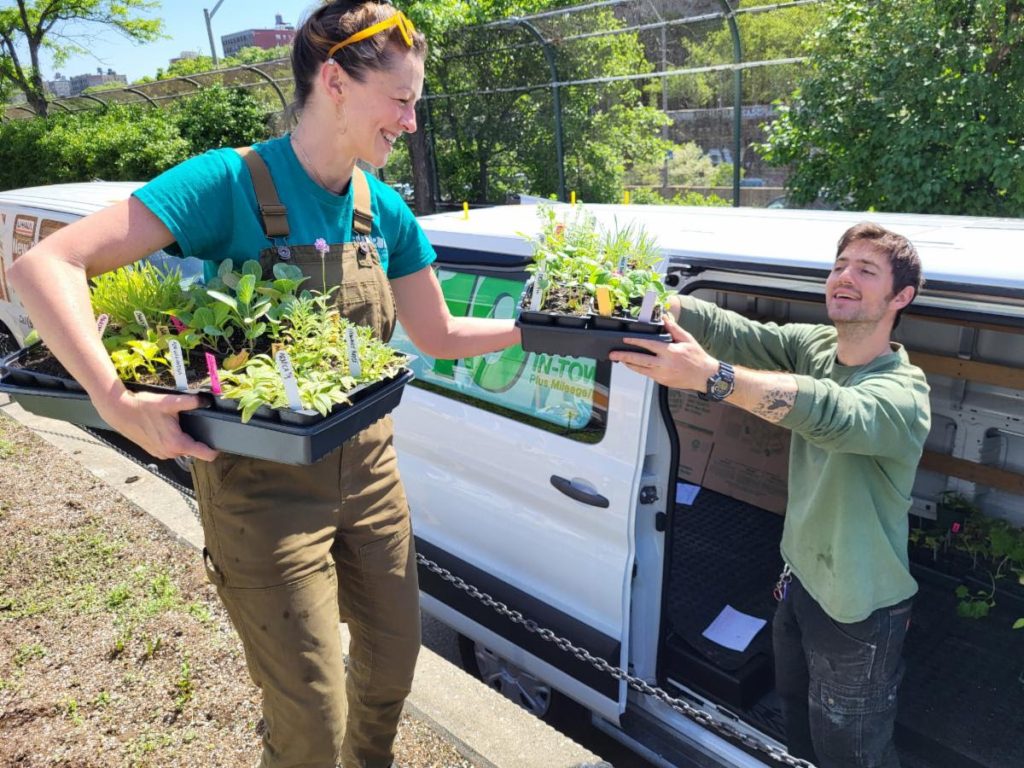
Now, these seedlings are ready to begin the next stage of their journey: being transplanted by The Hort and community residents into gardens and raised beds across NYC. You’ll find them thriving in schoolyards, supportive housing sites, and public spaces citywide.
One such destination was PS396, where The Hort led an Earth Day transplanting activity. Families and students came together to plant in newly built raised beds made of recycled materials, bringing new life to the school’s outdoor space.
In their new homes, these plants will continue to grow under the care of students, families, and local gardeners with guidance from our dedicated Hort staff. Each plant is more than a vegetable or herb; it’s a living link to heritage and identity. By growing culturally significant crops, we help foster belonging, pride, exchange and build connections in every community we serve.
We can’t wait to watch them flourish and grow until its time for HARVEST season! Plan your visit to the Greenhouse and Education Center to see these herbs in action!