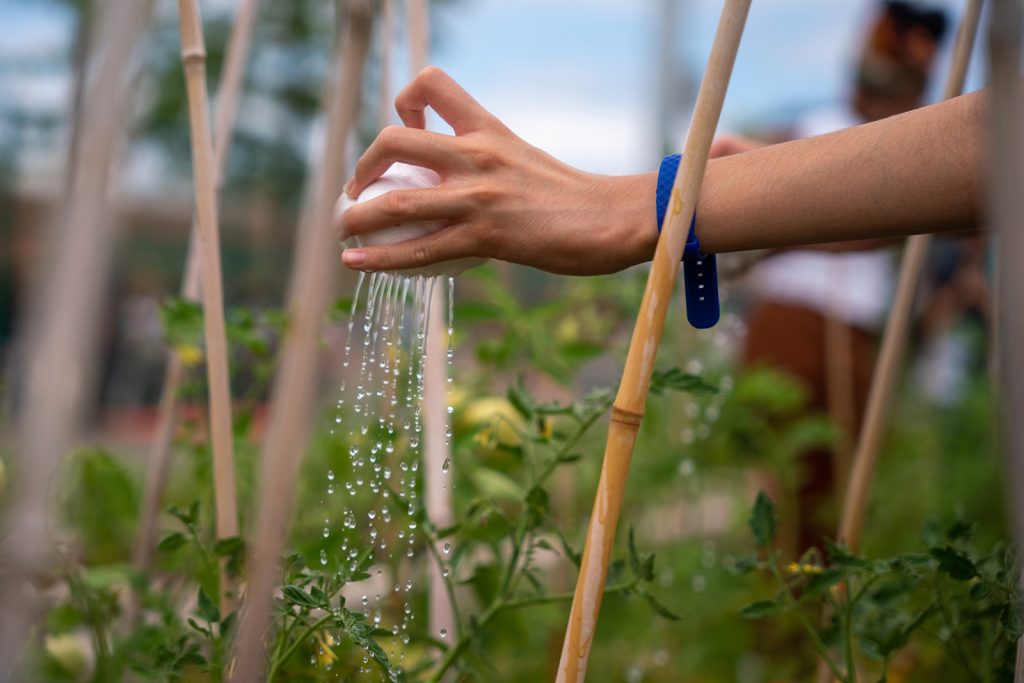
Water. Like the air we breathe, water is essential to human survival. Similarly, plants are dependent on water, but they are unable to access it without help. In fact, one of the most challenging aspects of creating green spaces in New York City is making sure plants have the water they need to survive.
In the next two newsletters, we will explore how water, the simplest of things, can be complex in highly urban environments. In this newsletter, we will explore what makes watering difficult.
1. It’s getting hotter—heat and sun. Year over year, summers are getting hotter, with July and August the hottest months of the year. In urban environments, the effects of heat and full sun are even more intense. The soil dries out faster, and more frequent watering is needed. The heat also degrades the health of the soil if left dry for too long, making the timing of watering essential. With increasing temperatures, plants need supplemental sources of water to survive.
2. Plants take a lot of water. A single tree pit requires 25-35 gallons of water per week. A single site managed by The Hort may have as many as 100 planters that must all be watered for the plants to thrive and survive the heat of summer. With many sites that need watering, hundreds of gallons of water are needed per day.
3. Water is very heavy, weighing approximately 8 lbs per gallon. That means that a single tree pit may require 200 lbs. of water each week. Transporting large amounts of water presents its own challenge. Water is heavy, making it difficult to transport and distribute, especially in large public areas.
4. Our green spaces are widely dispersed. Our commitment to greening the in-between means that the sites we service are dispersed across all five boroughs. We create and manage green spaces in communities and commercial corridors all over NYC, especially in underserved areas. This means our watering operations need to reach sites with limited access to water.
5. Fire Hydrants are intensively managed. Public green spaces often lack dedicated water supplies, and water sources in urban areas can be scarce or difficult to access. We rely on fire hydrants for our water supply around the city. To access a fire hydrant, we must apply for a permit for every fire hydrant every year.
6. Fire Hydrants can be blocked. In addition to needing a permit, the fire hydrants we need to use are not always accessible due to physical blockages like construction or an illegally parked vehicle.
7. Watering needs are unpredictable. Plant watering is highly dependent on weather conditions. Urban microclimates can create unpredictable watering needs, and rainfall may not reach all areas evenly due to buildings and infrastructure. This means that our operations need to be flexible to ensure plants get the water they need when they need it.
8. Soil Compaction. Soils in tree pits can be compacted by foot or even vehicular traffic. This results in dense soil that does not absorb water. These tree pits may require more water in addition to treating poor soil.
Watering plants in the city is operationally intensive or complex in unexpected ways. The story of watering plants in New York City is a story of the city itself – its diversity and range, its complicated infrastructure, and the challenges that come with navigating this landscape. These are challenges we all face living in NYC, most importantly, the challenge of limited access to precious resources, including water. In our next newsletter, we will cover how we are managing this challenge to ensure that all New Yorkers have access to green spaces that can survive.